
.ade/worktrees/. You never pick a “lane type”; what varies is how you bring the new lane into being.
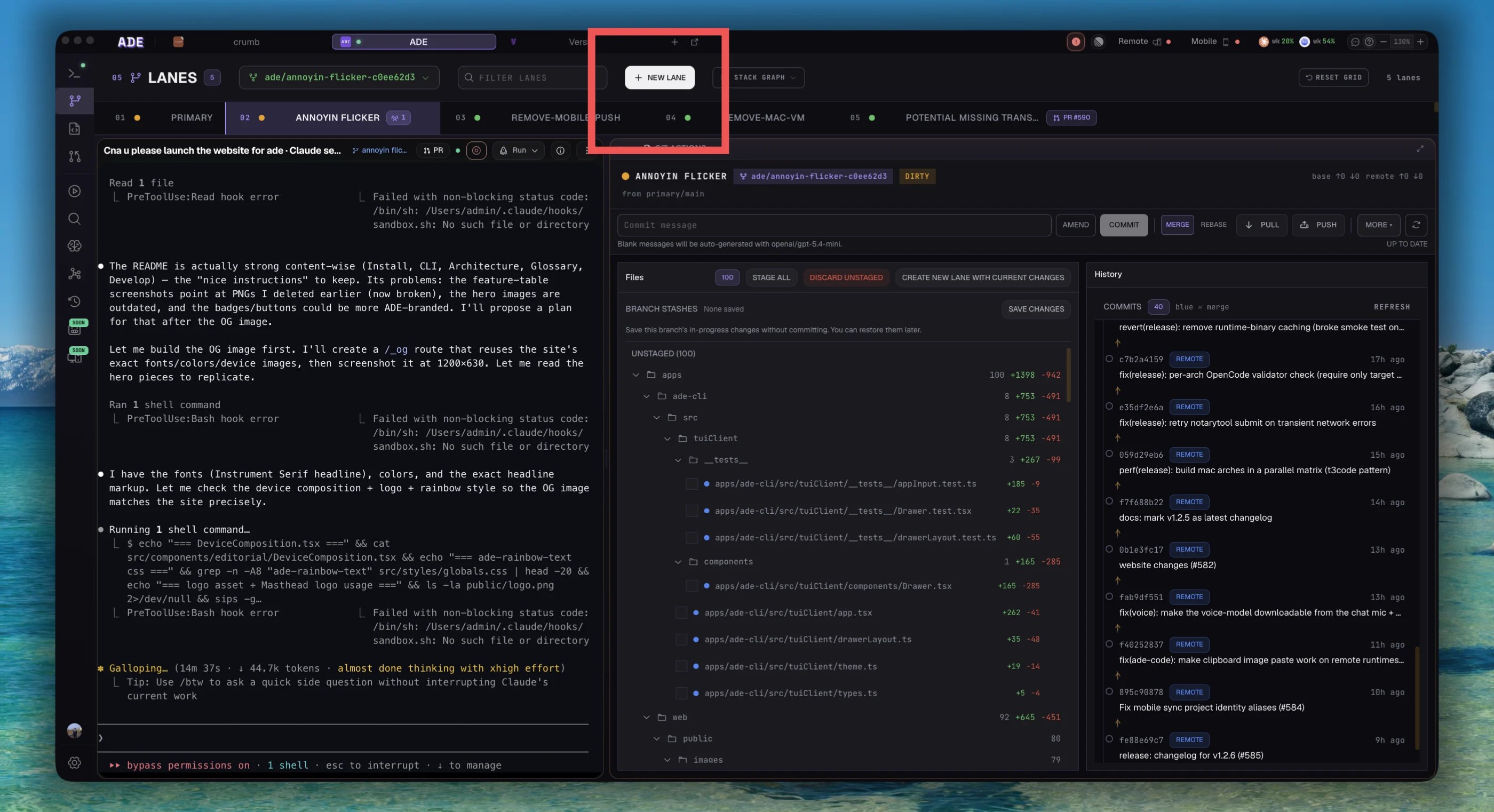
Start a new lane from the Lanes view.
The four ways to create a lane
New worktree off a branch
Branch a fresh worktree from your default branch — or any other branch. The default, and the safest place for agent work.
Child lane (stacked)
Branch a lane off another lane instead of
main to build dependent work as a stack. ADE calls these child lanes.Import an existing branch
Pull a branch you already have — local or remote — into a worktree ADE manages.
Attach an external worktree
Already made a
git worktree outside ADE? Attach its path and ADE tracks it without ever moving or cleaning it.New worktree off a branch
This is the default path. Open the Create lane dialog, name the task, and choose what to branch from.1
Open Create lane
Click New lane in the Lanes view.
2
Name the task
Use a short, outcome-shaped name like
fix-auth-redirect or add-health-endpoint. The name becomes the branch and the worktree folder slug; ADE also picks an unused accent color for the lane.3
Choose the base
By default ADE branches from your default branch. Open the branch picker to start from a specific branch instead.
4
Create
ADE runs
git worktree add, checks the new branch out under .ade/worktrees/, and the lane appears in the list.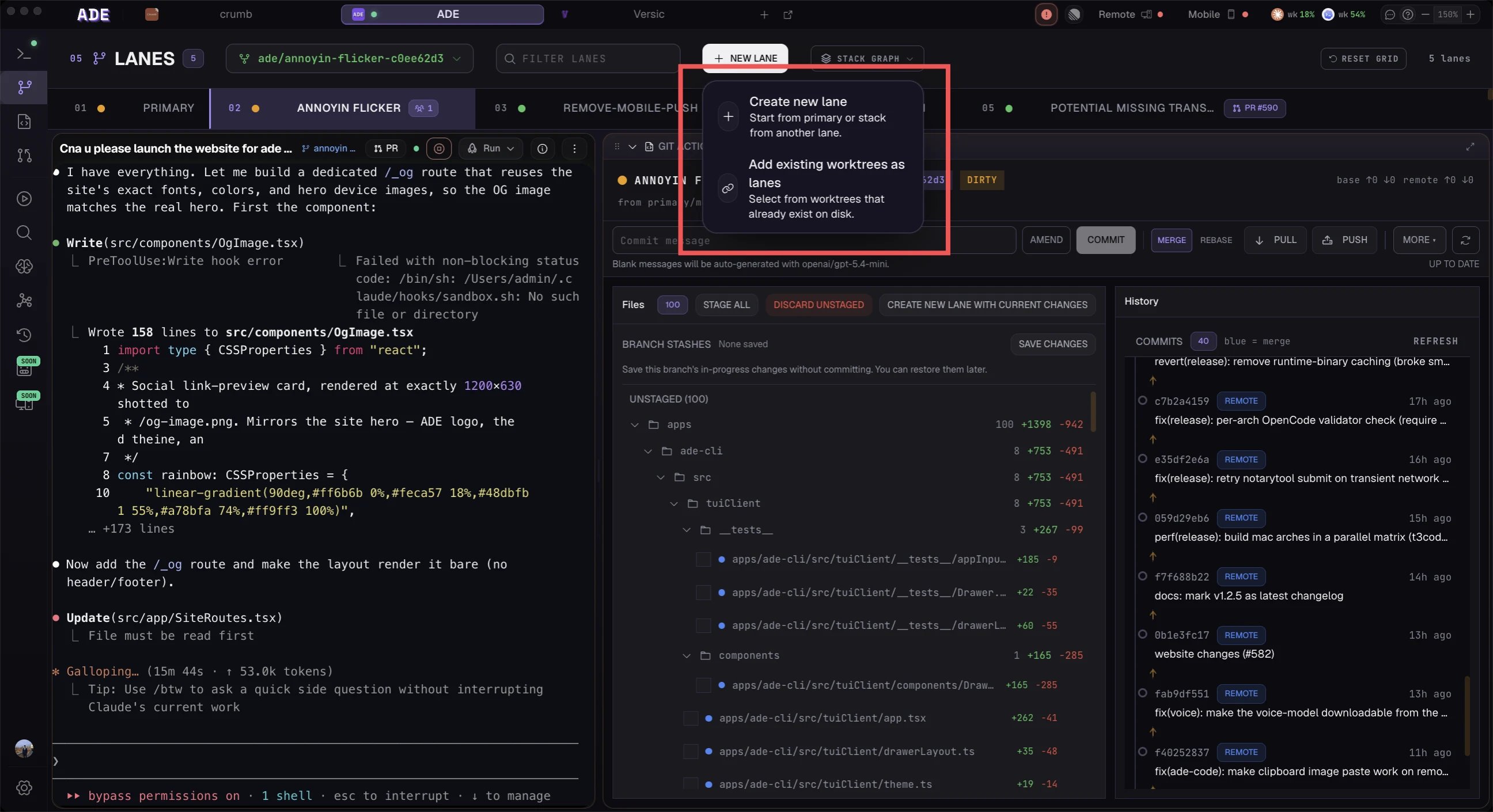
Name the lane and choose what to branch from.
The branch picker filters as you type and shows each branch’s last-commit author and date. Branches with an open pull request carry a PR pill (
#NNN, dimmed for drafts) so you can tell at a glance what’s already in review.Auto-create from a task or Linear issue
You don’t have to fill in the dialog by hand. Hand ADE a task — or connect a Linear issue — and it derives the branch name, names the lane, and attaches the issue as context so the agent starts with the right spec.Child lane (stacked)
To build on top of work that hasn’t merged yet, create a child lane: its branch is based on the parent lane’s branch instead ofmain. Select the parent lane, choose New child lane, and the chain forms automatically. The full review flow — stacked PRs and rebase propagation — lives in Stack lanes.
Import an existing branch
Have a branch already, local or remote, that you want ADE to manage as a worktree? Use the import existing branch path inside the Create lane dialog. It swaps the dialog body for the branch picker; pick a branch and ADE creates a managed worktree checked out to it.The same picker that backs new worktrees powers import — search by name, filter to your own branches (
author:me), or jump straight to a PR number (#NNN). The PR pills come from GitHub and are fail-soft: if the PR lookup errors, the picker still works, just without pills.Attach an external worktree
If you created agit worktree outside ADE, attach its path from the lane actions. ADE records the lane and tracks its status, but never moves or cleans the directory — deleting an attached lane only removes ADE’s row, leaving your files in place.
Rescue uncommitted work
Started editing in the wrong place? ADE can lift uncommitted changes into a fresh child lane — it stashes the work in the source worktree and applies it in the new lane, then rolls back cleanly if the apply fails. This is the “rescue uncommitted work” path; it needs the source to have no staged changes and no in-progress merge or rebase.Create a lane from a commit
In the History tab, the Create lane here action on any commit branches a new lane starting from exactly that commit, instead of from a branch head. ADE verifies the ref and uses the resolved commit as the worktree’s start point.Rename, archive, or delete
Open a lane’s manage dialog to change it once work is underway or done.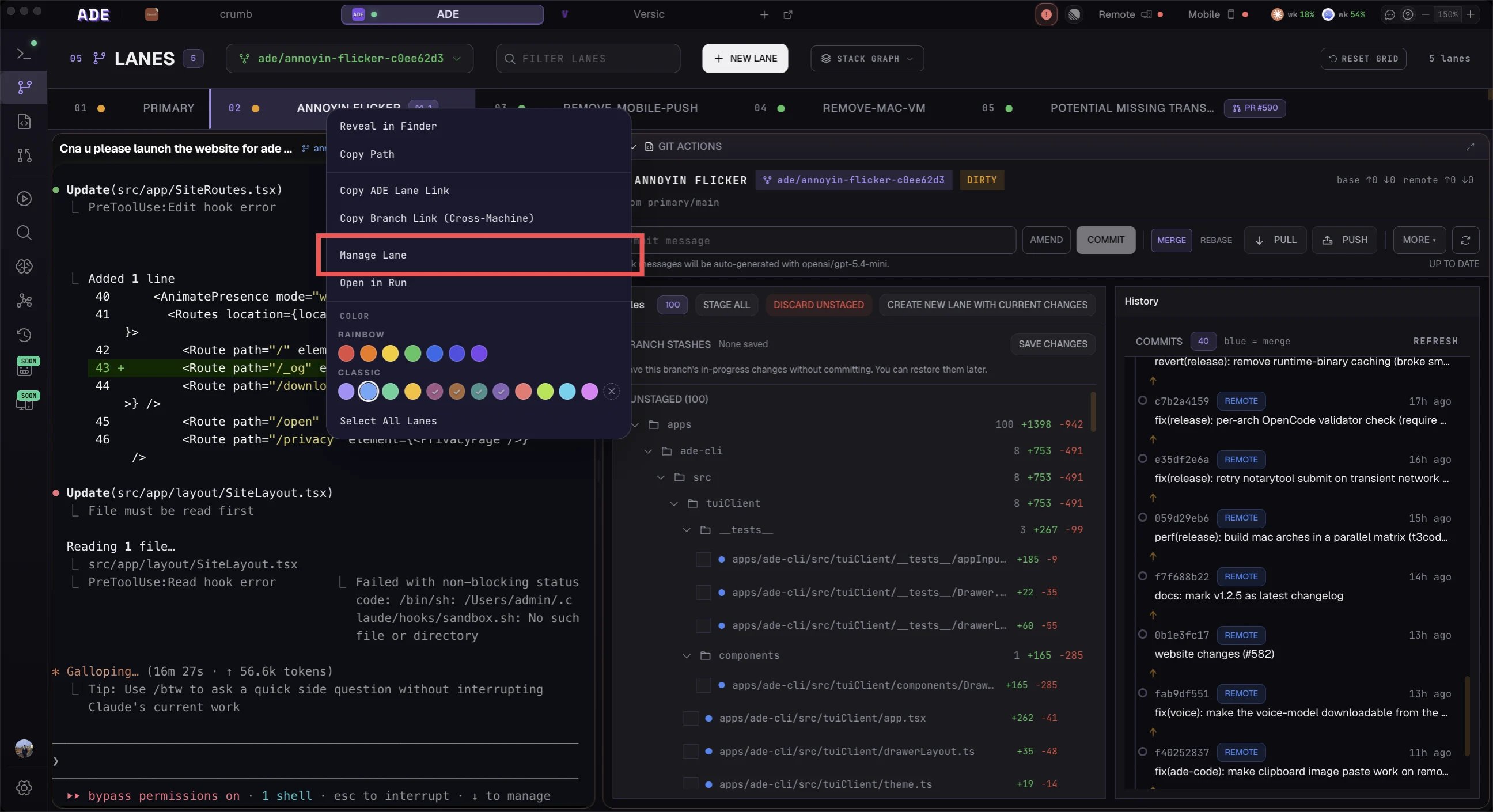
Open a lane's manage actions.
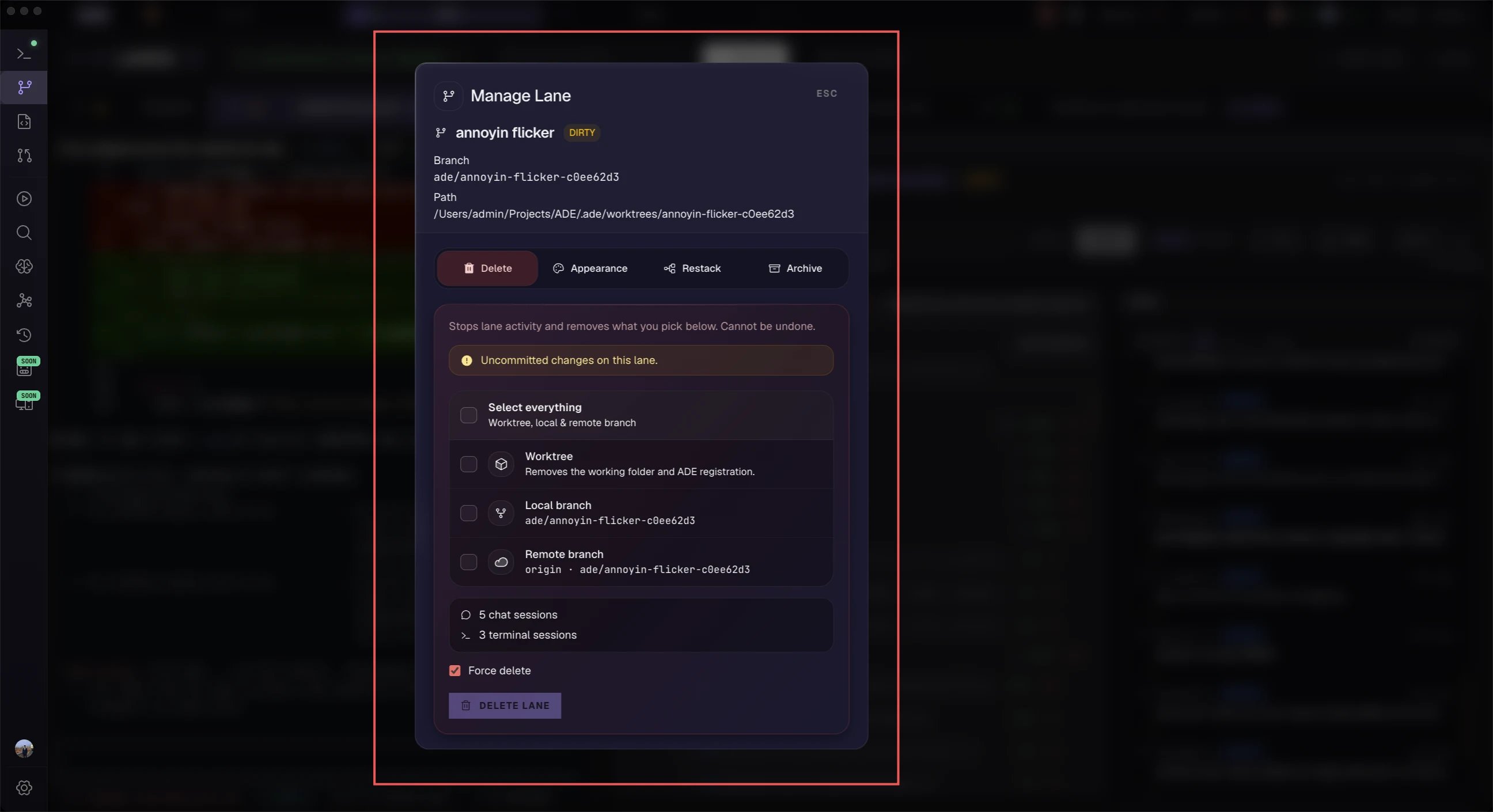
Rename, recolor, archive, or delete from the manage dialog.
What delete tears down
Delete isn’t justrm -rf. ADE runs an ordered teardown and shows live progress for each step: it cancels auto-rebase, stops the lane’s processes, terminals, and file watchers, cleans up lane environment resources, releases the lane’s leased port range, removes the git worktree, and only then clears ADE’s rows. You can optionally also delete the local branch (and the remote branch). Before you confirm, ADE surfaces a preflight check — dirty files, unpushed commits, running processes, and whether a remote branch exists.
Good cleanup habits
- Archive stalled experiments instead of leaving every lane active.
- Delete lanes once their PRs merge and follow-up work is done — this returns the port range to the pool.
- Keep lane names tied to outcomes, not model names.
- Use the History tab to find what happened in a deleted or archived lane.
Manage lanes from the terminal
Manage lanes from the terminal
Every lane action is also available from the Run
ade CLI and inside ade code:ade lanes --help to see every command and flag. In ade code, the /new lane and /lane delete slash commands drive the same paths.Lanes overview
How lanes isolate work and sync across surfaces.
Stack lanes
Build child-lane chains and reviewable stacks.